
Heat Pump & Heat Exchanger Service & Repair
Big Enough To Get The Job Done, Small Enough To Care


Heat Exchanger & Heat Pump Installation
We offer 24 hour emergency service for heat pumps and heat exchangers. You can count on our heating technicians for quality heating and cooling repair at home or your business. Ask about our same day service when you call.
Our heating and air conditioning repair technicians have decades of experience with heat exchanger and heat pump systems. Call us any time for maintenance services, repair work, heat pump replacement or installation services.
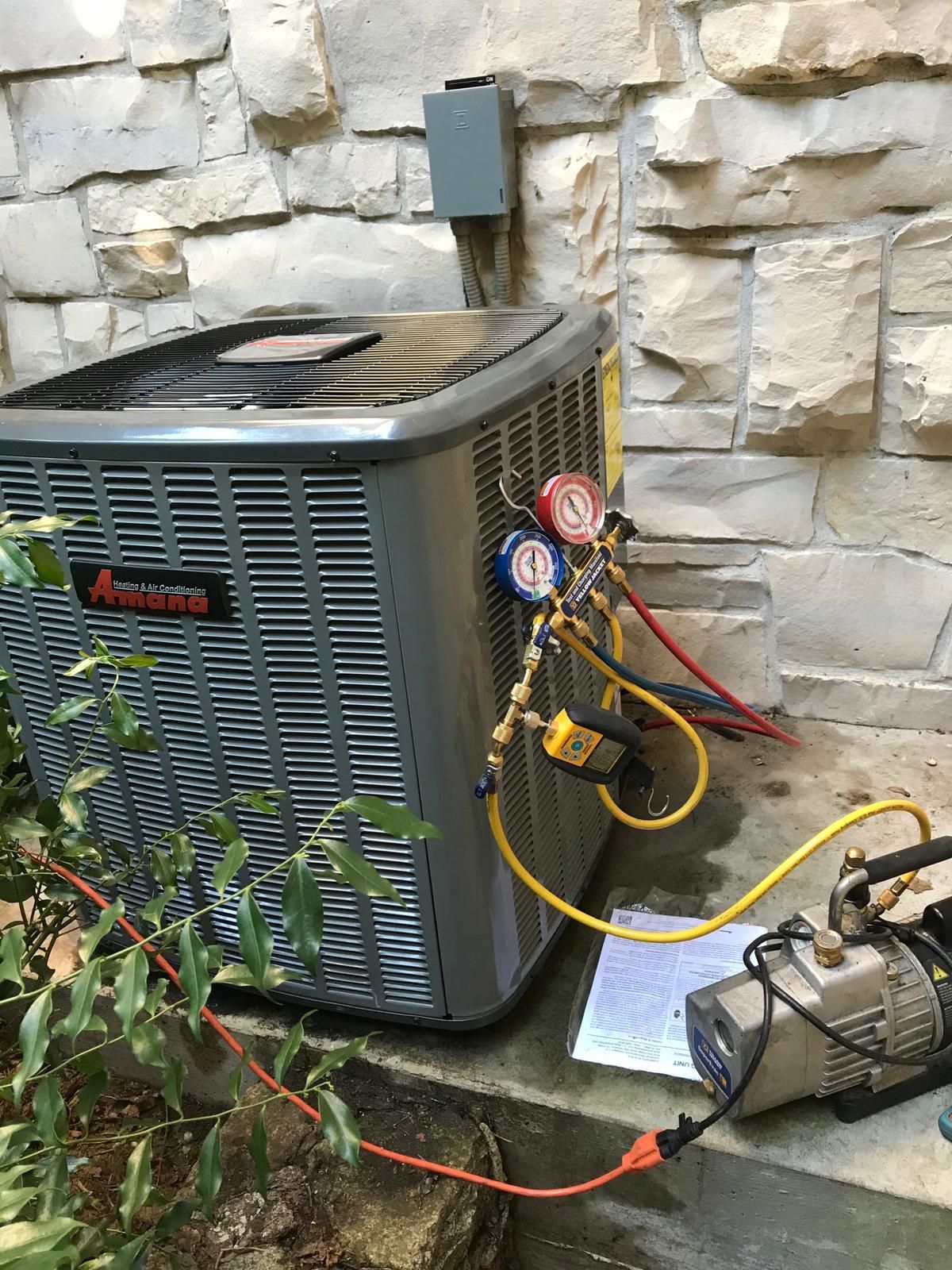
Heat Pump Repair and Replacement Service
Hybrid Dual Fuel Heat Pump
In terms of heating and cooling, a hybrid dual fuel heat pump offer the best of both worlds. Using this heating system, your home will have an energy-efficient device that can work all year round. It combines a traditional heat pump with a furnace. You can save energy and money on utility bills with a dual fuel heat pump, in addition to helping the environment.
Having a heat pump will cover your heating and cooling needs all year long, so you only need a single HVAC system. Heat pumps adjust to the weather outside because they are flexible. Heat pumps, for instance, extract heat from outside air and transfer it into the house during the cold months. During warmer weather, they remove hot air from the home to cool the home.
In the summer months, the heat pump in the system works like a central air conditioner, transferring hot air out of your house until your thermostat reaches your desired temperature. It also provides cost-efficient heat during milder temperatures in the fall and spring.
As the temperature drops during the winter months, the dual fuel furnace takes over and works to heat the entire house. The purpose of a furnace is to efficiently and quickly convert fuel into heat. The furnace in your dual fuel system will keep you warm when it's cold outside.
Heat pumps only have one disadvantage - a shorter lifespan (around 15 years) due to the fact they move air all year round to reach the desired temperature.
DIY Maintenance
Virtually anyone can take a few minutes out of their weekend to check the filter and make sure the exterior part of the unit is kept free of dirt, debris, and obstructions. Doing these two things once or twice a year can help keep your unit humming along and increase its service life considerably, but there are other areas of heat pump service that are the domain of skilled technicians.
Repair Services
For heat exchanger service work, we are equipped to clean and coo all makes and models of flat plate, shell and tube heat exchangers to help reduce energy bills.
Our quality services for heat exchangers include…
- Chemical cleaning
- Wash on-site
- Clean-in-place (CIP)
- New gaskets and plates
- Complete new units
- Replace tube bundles
- Replace complete shell and tube exchangers
We can deliver and install replacement gaskets and plates for any make and model of flat plate exchangers. We ensure the unit is optimized for best heat transfer performance and energy savings. The installation process is timely and we do our best to not interfere with your daily routine.
One of the main selling points of heat pumps is that they are generally low maintenance units, but low maintenance does not mean no maintenance. Even in an ideal condition heat pumps require a degree of regular upkeep and servicing to keep the utility bills at reasonable levels. If left un-maintained, heat pumps can, of course, continue doing their job for a long time, albeit at an ever-decreasing rate of efficiency until complete failure finally sets in. Heat pump maintenance generally falls into two distinct categories-- ordinary household upkeep and annual checkups by expert contractors.
Routine Heat Pump Maintenance
Every heat pump service inspection is done by a knowledgeable technician who provides an opportunity to verify that everything in the system is actually working as anticipated. Among these chores is the need to perform a comprehensive heating system check which ensures that it will kick on when it is supposed to, and only when it is supposed to. While not a common occurrence, the heating system will sometimes fail to lock out when the system is supposed to be cooling the house. A good repair technician will know how to set things up to avoid that type of problem and keep energy costs low.
Another energy hog is when the defrost cycle does not function properly. Cooling systems can ice up when running for long periods of time. When this happens, it is necessary for the unit to self-defrost before resuming operations. If the defrost cycle does not work properly, the unit will continue to labor but will only produce hot air.
The biggest areas of concern when it comes to heat pump repair and service are the levels of refrigerant in the unit and proper operation of the thermostat that controls its operation. Good repair techs will know improper refrigerant levels cause the heat pump to work extra hard at best and can burn out the compressor in the worst case. This can be the most expensive type of heat pump failure and might even end up causing a fire if the area around the unit is not kept clear of weeds and other flammable debris. If the unit degrades to that point, heating and air repair becomes an expensive proposition. Hence the need for proper maintenance. Regular maintenance will set up the unit for optimal efficiency and life span.
Thermostat checks makes sure that the heat pump is cycling on and off at the correct temperatures and also that it is performing the proper function during that time period. Because the heat pump essentially is a bi-directional appliance that moves air in one direction during the summer and the opposite direction during the winter, problems with the thermostat being improperly set up, or improperly replaced at a later date, can lead to some unexpected consequences.
The service protocol should also include an examination of the duct work for those systems which employ them, inspection and lubrication of motors, inspection of drive belts, and a careful examination of the entire wiring harness to ensure that there are no signs of incipient failure.
Ideally, peak savings and optimal indoor comfort comes from running a system at its full capabilities, which are best achieved via full adherence to the maintenance protocols laid down by the manufacturer.
How a Heat Pump Works, Comfort All Year Round
If you have ever wondered how a single system can keep your home cool in the summer and warm in the winter, the answer might be a heat pump. It is one of the most versatile and energy-efficient options available to homeowners today, and understanding how it works can help you make smarter decisions about your home's comfort.
What Exactly Is a Heat Pump?
A heat pump is an electrically powered unit installed outside your home that works alongside an indoor air handler to both heat and cool your living space. The beauty of a heat pump is that it does not actually create heat, it simply moves heat from one place to another. In the winter, it pulls warmth from the outdoor air and transfers it inside. In the summer, it works in reverse, pulling heat out of your home and releasing it outside. Because it moves heat rather than generating it by burning fuel, it is far more energy efficient and much better for the environment than a traditional furnace.
How Does It Actually Work?
The system uses a refrigerant that continuously circulates between the outdoor unit and the indoor air handler. This refrigerant absorbs and releases heat as it moves back and forth, keeping your home at a comfortable temperature regardless of the season. Even on a cold day, there is enough heat energy in the outdoor air for the system to capture and use. In colder climates, an electric heat strip can be added to the indoor unit to give the system a little extra heating power when temperatures really drop.
What Types Are Available?
The two most common types are air-source and ground-source heat pumps. Air-source heat pumps, which transfer heat between indoor and outdoor air, are the most popular choice for residential homes because they are affordable and straightforward to install. Ground-source heat pumps, also known as geothermal systems, exchange heat between your home and the ground outside. Since ground temperature stays relatively consistent throughout the year, these systems tend to be more efficient and cheaper to operate, though they do cost more upfront to install.
Where Do Heat Pumps Work Best?
Heat pumps perform exceptionally well in mild climates where temperatures rarely drop below freezing. In colder regions, they can be paired with a gas furnace in what is called a dual fuel system. This setup uses the heat pump on all but the coldest days, then automatically switches to the furnace when outdoor temperatures drop too low for the heat pump to keep up. It is a smart, cost-effective combination that gives you the best of both worlds.
If your heat pump needs repairs or routine maintenance, do not put it off, give us a call and book an appointment today. Take a look at our Google reviews and see what our customers have to say. We think you will like what you find.